← Back to Mini-Mysteries
How the Mysteries Work
As a homeschool parent myself, I know what you're looking for. A curriculum your kids will be excited to jump into, without you spending hours preparing lessons, printing endless pages, or running around town looking for supplies.
With Cactus Curricula, you just need to grab a cup of something in the morning and get started.
Every mystery revolves around a storyline. Parents have told us their kids get so caught up in the mystery that they ask to read a little more or try another hands-on project. And the best part? They're remembering what they've learned.
The storytelling doesn't stop when the reading ends. It carries through the week, connecting the subjects instead of separating everything into individual lessons and dull worksheets.
See how our mysteries can bring story-driven learning into your homeschool.
Flexible Lessons and Schedule
This digital curriculum is both online and offline. The course is designed to be easy to teach and flexible to fit your schedule. Each week provides everything you need, including lessons, videos, and printable PDFs for activities, labs, and projects. You simply open the lesson, print what you need from the Print Center, and begin.
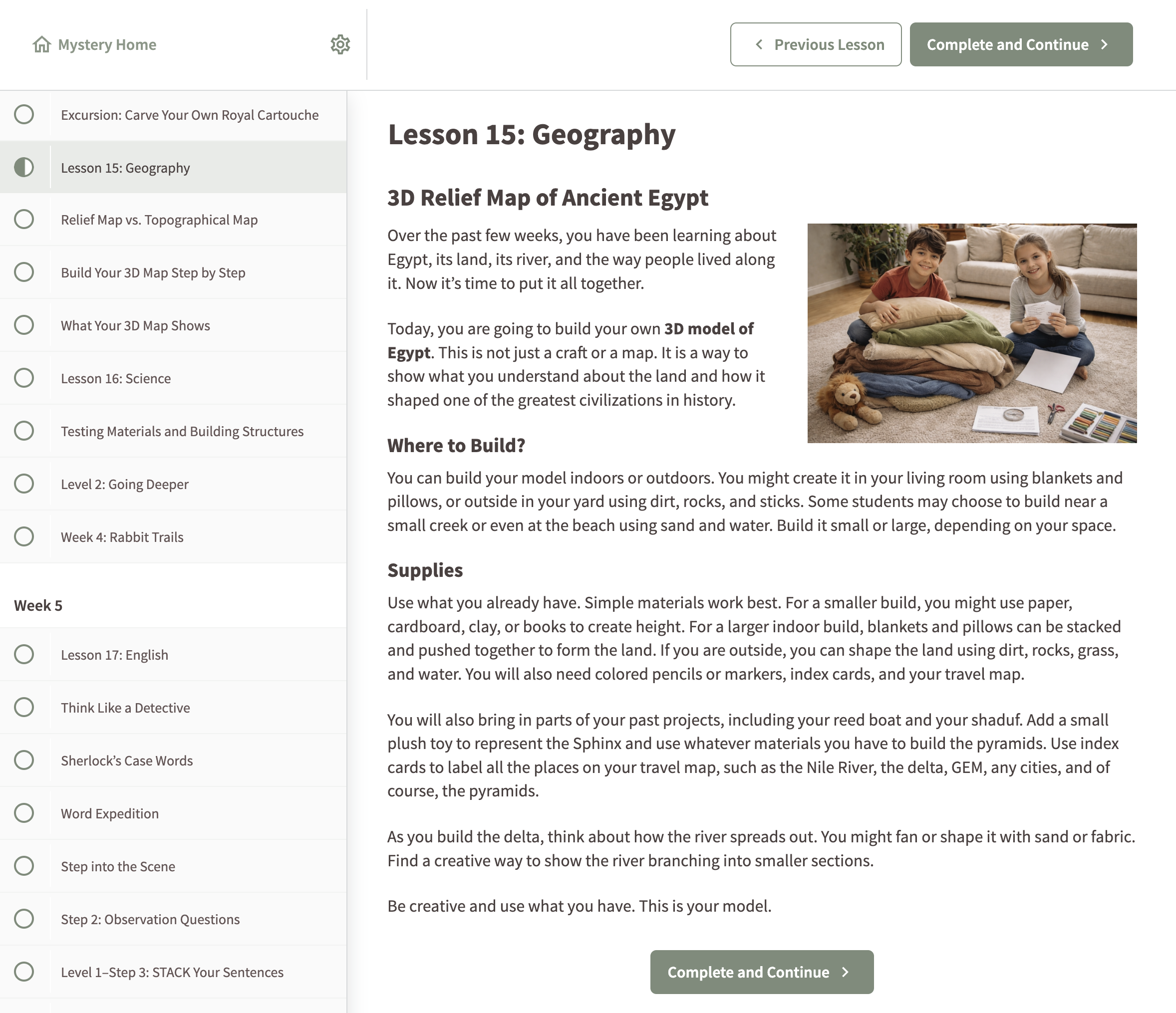
Each Mini-Mystery is a six-week core adventure with four lessons each week. Many families complete one lesson a day, four days a week, but you can easily adjust the pace. Some move more quickly, while others spread the lessons over additional days. Choose the rhythm that works best for your family. Adding all the optional projects and Rabbit Trails can extend your course to as much as eight weeks.
Take your time, enjoy the story, and don’t feel you need to keep a rigid schedule. The goal is not to rush through the material, but to give your child time to think, explore, and stay engaged with what they are doing.
What To Expect
The mysteries include a mix of activities that build skills and create a memorable experience.

As students move through the story, they will:
- Follow the mystery as it unfolds
- Read for comprehension through Think Like a Detective
- Learn and apply new vocabulary in context
- Practice writing through guided and creative activities
- Explore history through real people, places, and events
- Build geography skills as they follow the journey across the map
- Engage with science concepts through hands-on activities.
- Strengthen critical thinking by analyzing clues, asking questions, and making connections
Levels
Level 1 (ages 8–10) and Level 2 (ages 11–12) are built into select lessons, allowing you to choose the level that best fits your child's needs. Both levels are included in each mystery, giving families flexibility for different ages, abilities, and learning challenges.

Level 1 supports younger or emerging learners with more guidance, shorter responses, and simpler expectations.
Level 2 encourages older or more confident learners to explore ideas further, write longer responses, and work independently.
You'll see Level 2 clearly marked within the curriculum, with most of the differences in the English lessons and additional Level 2 options in science. For the most part, everyone is learning together through the same storyline, history, geography, and science lessons.
Repeat Rhythm
The mystery follows a consistent weekly rhythm. Each week includes four lessons covering English, history, geography, and science. While the content changes, the structure stays familiar, so you can focus on the material rather than figuring out what to do next.
English
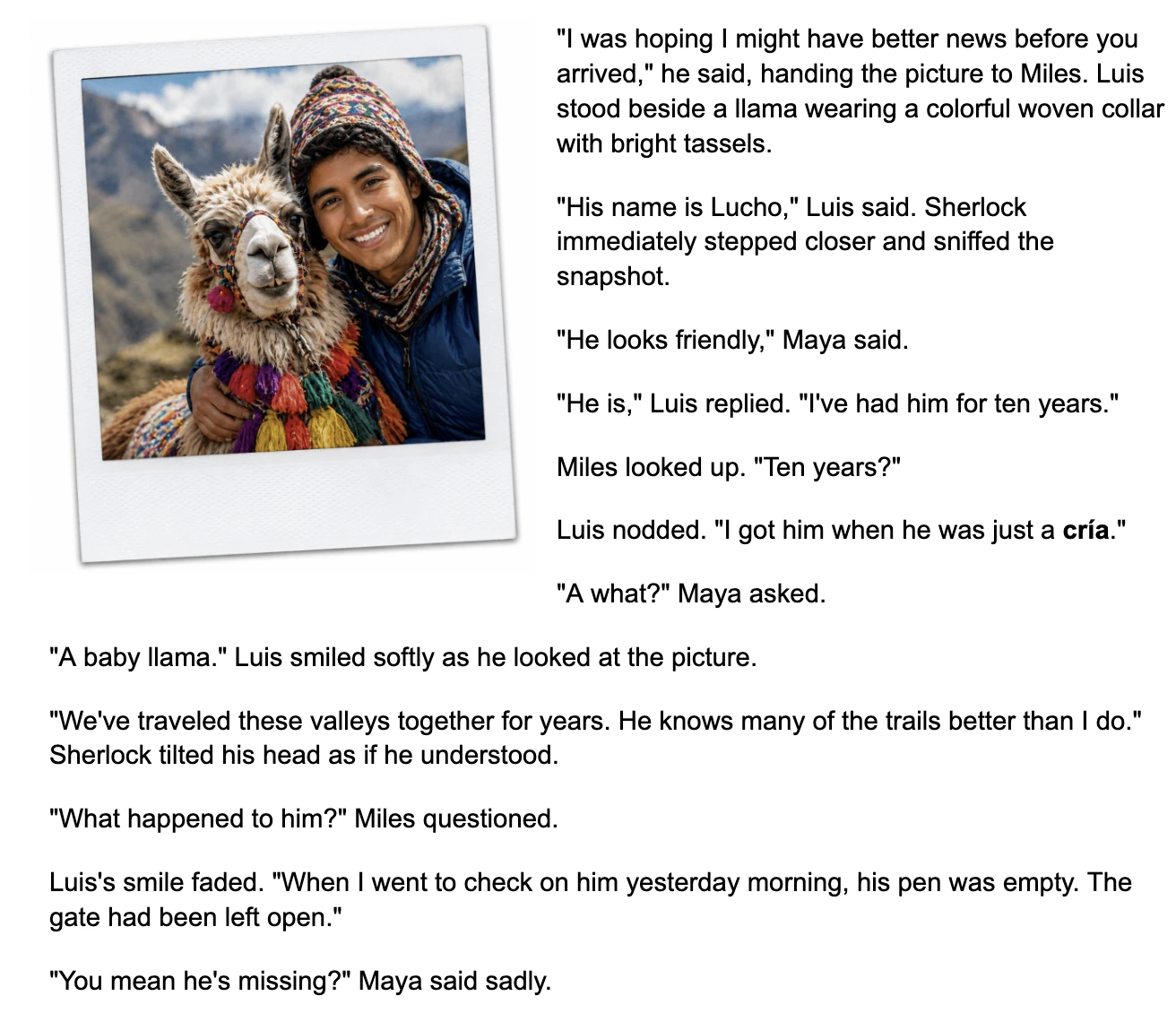
Storyline: This is the main story segment for the lesson. It introduces new clues and moves the mystery forward.
Think Like a Detective: These questions build reading comprehension through discussion about what was read. They are best used for conversation, not as a writing assignment.
Sherlock’s Case Words: This section introduces the week's vocabulary. Students will encounter these words throughout the storyline and the history, geography, and science lessons.
Word Expedition: A hands-on vocabulary activity that reinforces new words through writing, explanation, and drawing.
Step into the Scene: This is the main writing activity for the lesson. Students respond to the story through guided or creative writing while learning to organize ideas, write complete sentences and paragraphs, use descriptive details, and support their responses with evidence. Although this is not a full grammar program, each case introduces new writing skills that will continue to develop throughout the Mini-Mystery series.
History
Throughout the series, students will explore many civilizations, archaeological discoveries, historical events and figures. They'll examine artifacts, study timelines, and learn how people lived, what they accomplished, and how their decisions shaped the world we know today.
Geography
Students will travel alongside Miles, Maya, and Sherlock as they explore countries, continents, landscapes, and cultures. They'll develop map-reading skills, identify important landmarks and physical features, and discover how geography influences where people live and how they adapt to their surroundings.
Hands-on activities include creating maps, comparing regions, and examining each destination's unique features.
Science
This series will introduce students to many branches of science, including physics, marine biology, earth science, chemistry, and more. Through experiments, labs, and hands-on projects, they'll investigate scientific concepts and discover how things work.
Students will learn to form hypotheses, test their ideas, record observations, and examine results. They'll also draw conclusions based on evidence, an important part of the scientific process.
Most lab and project supplies are common household items you probably already have on hand.

Excursions
Excursions are hands-on projects that give students a chance to apply what they've learned from the lessons. For example, in The Mystery at Machu Picchu, they design a market stall, practice perspective drawing, and become a vendor at the Pisac Market in Peru.
You'll find projects like this at the end of the history and geography lessons. They give your child an opportunity to be creative, work with different materials, and explore the topics a little further.
Rabbit Trails (optional)
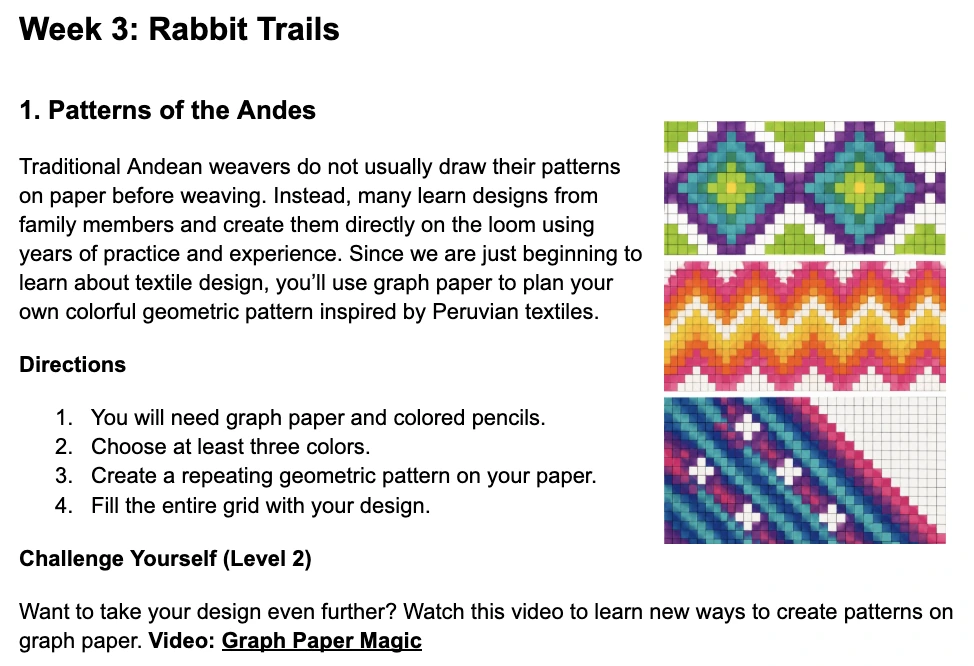
Each week includes four optional Rabbit Trails, for a total of 24 per mystery. These short extension activities let students follow their curiosity and discover more about the topics covered in the lessons. Depending on how many you choose, you can extend the six-week mystery to as much as eight weeks.
You can add Rabbit Trails throughout the week, save them for a fifth day, or use them over additional weeks. Choose the activities that interest your child and fit your family's schedule.
Compass Notes
Compass Notes are more than simple note-taking. Instead of only writing facts or full sentences, students combine short notes with quick sketches, symbols, labels, or diagrams. This approach helps them process what they are learning in a way that makes it easier to understand and remember.
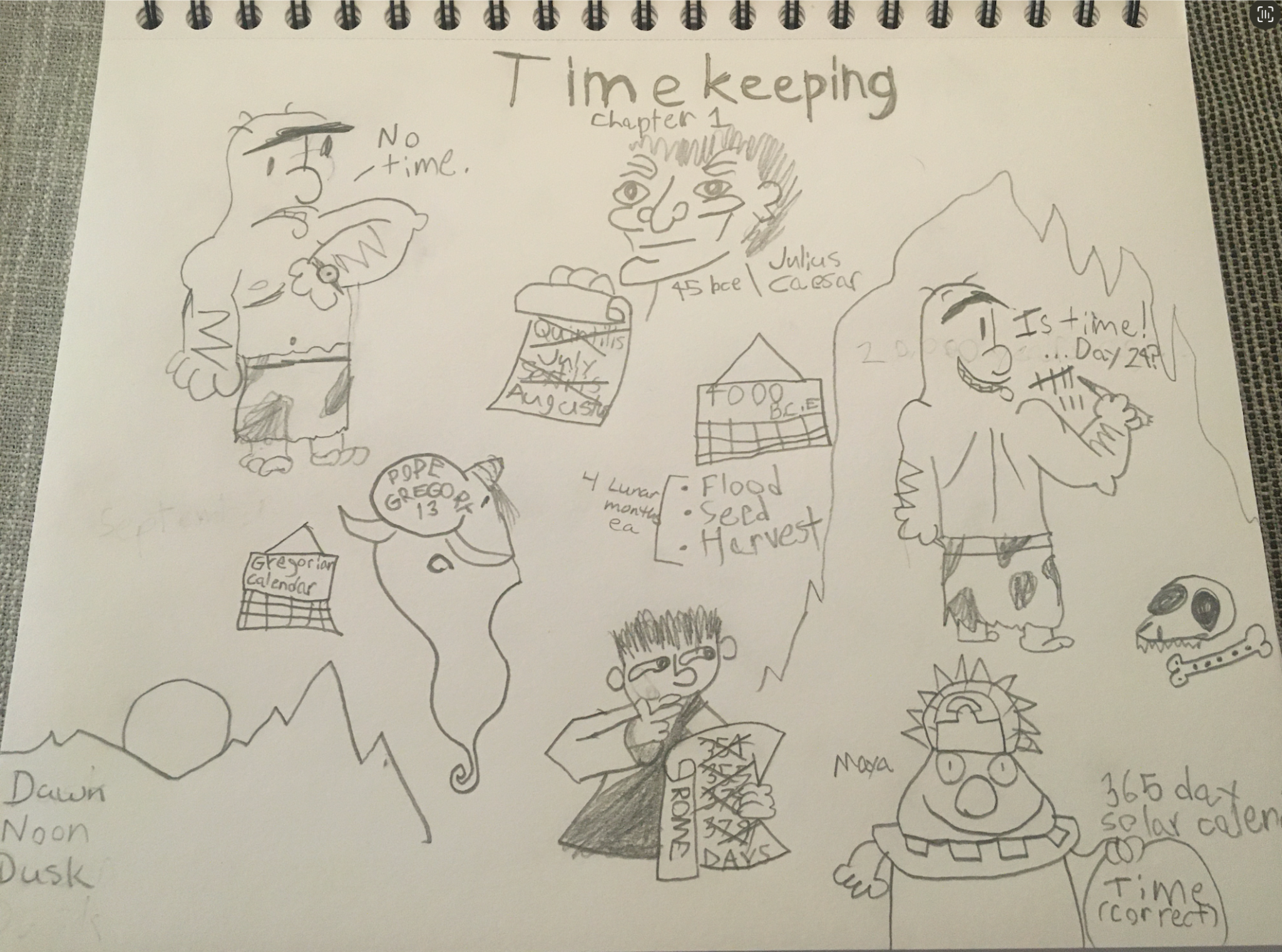
Any notebook or travel journal will work for this mystery and future cases.
The sample shows what Compass Notes can look like. There is no “right” way to do this. Children can add a quick note or a longer explanation. The goal is not perfection, but to help students record and recall what stands out to them.
By the end, their journal becomes a personal record of both the investigation and everything they discovered along the way.
Print Center
In the Table of Contents, any line items shown in bold indicate printable pages. These include worksheets, activity pages, and project materials that support each lesson.
Each week includes a PDF with everything needed for those activities and projects. This allows you to quickly access and print materials without searching through multiple files.
You may choose to print pages ahead of time or as you go. Both approaches work well, depending on your schedule and preferences.
Answer Key
To keep things simple and easy to use, only clear, content-based answers are included in this section.
For open-ended, opinion-based, or creative-thinking questions, student responses will vary. Some questions are meant to be discussed, explored, or answered in different ways based on what students notice and understand.